
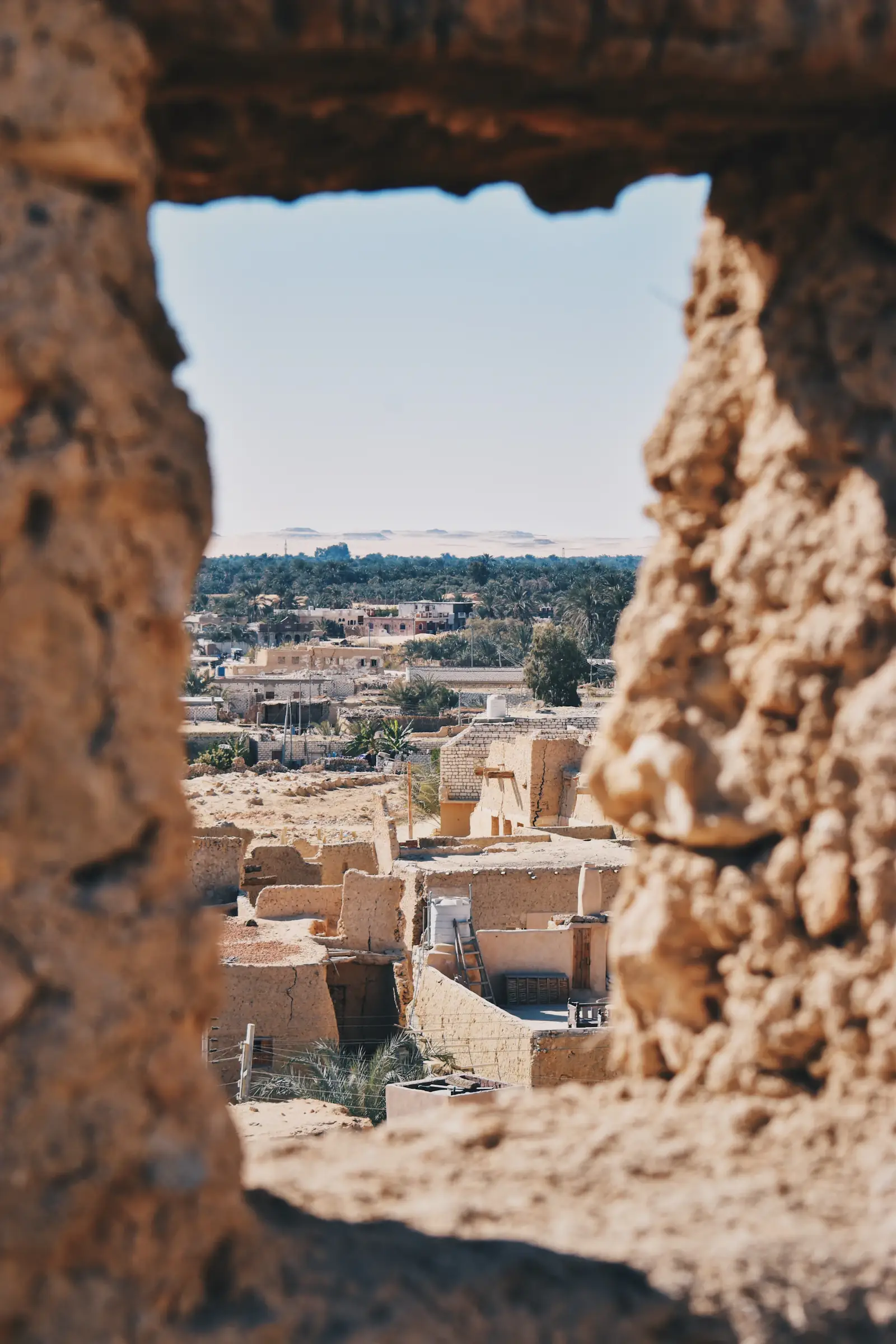
Far out in the Western Desert, close to the Libyan border and hundreds of kilometres from the Nile, lies an oasis that seems to keep a different rhythm of time. Siwa is a place of palm groves and salt lakes, of mud-brick ruins and natural springs, of star-filled nights and an ancient culture that has preserved its own language and traditions. It is not a destination for rushing; it is one for listening.
A crossroads of history
For thousands of years, Siwa was a vital stop on the desert caravan routes. Its fame in the ancient world rested on the Oracle of Amun, whose pronouncements were sought by kings. Its most celebrated visitor was Alexander the Great, who crossed the desert in 331 BC to consult the oracle and who, according to ancient historians, was greeted as the son of Amun.
What to see
The Shali Fortress
The old fortified town of Shali, founded in the 13th century, still dominates the centre of modern Siwa. It was built from kershef, a local mix of salt-rich mud and rock that dries as hard as stone — until it rains. A rare, heavy downpour in the 1920s began its long decline, and most of the town was gradually abandoned. Today, restored paths lead up through the sculptural, weather-softened ruins to a rooftop view over palms, lakes and desert that is magical at sunset.
The Temple of the Oracle of Amun
On the rock of Aghurmi, a short drive from town, stand the remains of the temple where Alexander is said to have consulted the oracle. Its setting — high above the palms, with sweeping views across the oasis — makes it easy to understand why this place was considered sacred.
Cleopatra's Spring
This round, stone-lined natural pool is the oasis's most famous bathing spot. The water is clear and refreshing, and the cafés around it make it a gentle place to spend an afternoon. Whether the queen ever swam here is a matter of romance rather than record.
The salt lakes
Siwa's turquoise salt lakes are so dense with salt that you float effortlessly. The contrast of white salt crust, blue water and golden desert is extraordinary. Rinse well with fresh water afterwards, and avoid swimming if you have cuts or scratches.
The Mountain of the Dead
Gebel al-Mawta is a conical hill honeycombed with rock-cut tombs dating largely from the Late Period through Ptolemaic and Roman times. The best known, the Tomb of Si-Amun, retains beautifully painted scenes that blend Egyptian and Greek artistic traditions.
The Great Sand Sea
Beyond the oasis begins one of the largest dune fields on Earth. An afternoon in a four-wheel drive with an experienced local driver brings dune crossings, sandboarding, a dip in a desert spring and a sunset of rare stillness.
The flavours of Siwa
Siwa is renowned for its dates and olives, grown in groves watered by hundreds of natural springs. Siwan dates, olive oil and handicrafts — embroidered textiles, woven baskets and silver jewellery — make meaningful souvenirs that directly support local families.
Siwan culture and respectful travel
Siwans are an Amazigh community with their own language, Siwi, and customs quite distinct from those of the Nile Valley. Society is conservative and close-knit, and a respectful visitor is received with genuine warmth.
- Dress modestly in town, covering shoulders and knees.
- Always ask before photographing people, and refrain from photographing women.
- Public displays of affection and alcohol are out of place here.
- Buy local, hire local guides and drivers, and leave nothing behind in the desert.
- Carry your passport: checkpoints on the desert roads are routine.
When to go
The best months are October to March, when days are warm and nights are cool — occasionally cold enough to gather around a fire. Summer is intensely hot and best avoided.
If Siwa's silence is calling you, Golden Scarab's team would be happy to design an unhurried programme there, with trusted local guides and a stay that suits your style.